
This site has been designed with our domestic customers in mind; we have much more detailed technical information on our main website.
Cavity walls were first used in the 1900s but didn’t became common until after the 2nd world war. Some of the structural problems common to these types of houses are:
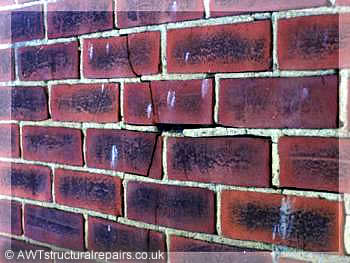
A survey by AWT will establish the cause of the problem. AWT will then recommend remedial work and provide a quotation.
The good news is that AWT has cost effective ways of repairing your home with the minimum of disruption.
Wall Tie Problems
Historically, wall ties were made from cast or wrought iron, mild steel or copper.
When steel wall ties become corroded, they expand to several times their original size. This lifts the brickwork, causing the surrounding brickwork to crack and/or bow, and destabilises the walls of your house. If not dealt with quickly enough, the entire wall will need to be rebuilt.

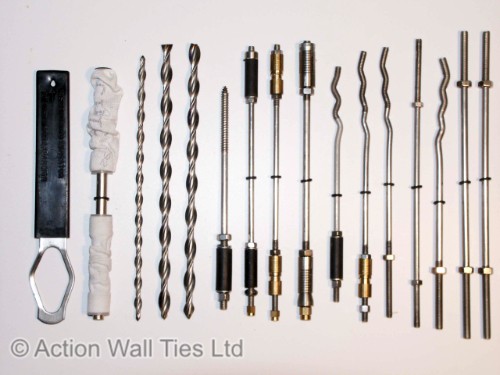
AWT can fit new non-rusting stainless steel wall ties and isolate old corroded wall ties to prevent further damage. AWT always match replacement bricks and pointing as closely as possible to the existing finish.
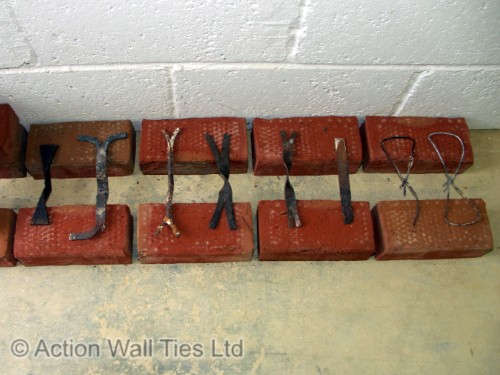
Wall Tie Life Expectancy
All mild steel wall ties will corrode and require replacing. The table below gives a guide to how long your wall ties should last. AWT only use non-rusting stainless steel wall ties.
| Construction Date | Wall Tie type | Life expectancy |
| Before 1945 | All types | Difficult to predict |
| 1945- 1964 | Strip ties | 31 – 61 years |
| 1945- 1964 | Wire Ties | 15 – 31 years |
| 1964 – 1981 | Strip Ties | 23 – 46 years |
| 1964 – 1981 | Wire Ties | 13 – 26 years |